
Where Your Donations Are Going: Two Research Projects You Are Powering Forward
One of the commitments we make to our donors is simple: if you invest in this work, you deserve to see exactly what your support is advancing.
Over the past several years, funds raised through our community — including the Night of Hope, the Hoedown for Hope and individual donor contributions — have been directed toward two high-impact research initiatives. Both projects are grounded in strong scientific rationale, led by respected institutions, and focused on changing outcomes for children living with Morquio (MPS IV).
Below is a closer look at the work you are helping move forward.
UCSF Benioff Children’s Hospitals – Vosoritide Safety Trial for Morquio
The Problem
Morquio syndrome (MPS IV) is characterized by impaired skeletal growth due to the body’s inability to properly break down specific glycosaminoglycans. Children experience progressive skeletal abnormalities, short stature, joint instability, airway complications, and frequent surgeries.
While enzyme replacement therapy addresses some systemic aspects of the disease, it does not sufficiently correct skeletal growth.
Why Vosoritide?
Vosoritide is a C-type natriuretic peptide (CNP) analog originally developed to improve bone growth in children with achondroplasia. It works by targeting pathways involved in endochondral ossification — the process by which long bones grow.
Researchers at UCSF – Drs. Ellen Fung and Paul Harmatz – are investigating whether this mechanism may also safely improve skeletal growth patterns in children with Morquio.
What This Trial Is Doing
The UCSF-led safety trial is evaluating:
- Safety and tolerability of vosoritide in children with Morquio
- Appropriate dosing protocols
- Effects on growth velocity
- Potential impacts on skeletal alignment and proportionality
- Monitoring for cardiovascular and systemic safety markers
This is a critical first step. Before any therapy can become widely available, safety must be clearly established within the specific disease population.
Why This Matters
If proven safe and beneficial, vosoritide could represent:
- A targeted therapy for skeletal growth in Morquio
- A reduction in orthopedic complications over time
- Potential decrease in surgical burden
- Improved mobility and quality of life
Your funding directly supports the infrastructure, coordination, and advancement of this clinical research effort.
University of Minnesota – T-Cell Engineering for Targeted Enzyme Delivery
The Problem
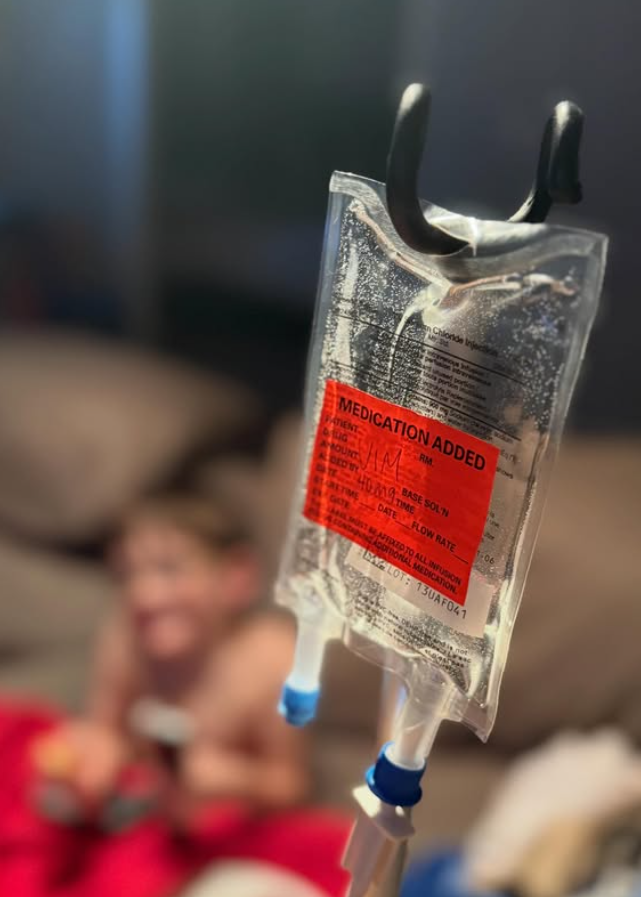
Current enzyme replacement therapy (ERT) requires lifelong weekly infusions and does not adequately reach cartilage and bone tissue — the areas most affected in Morquio. Additionally, ERT does not cross certain biological barriers effectively.
To truly change outcomes, researchers must find better delivery systems.
The Innovation: T-Cell Micropharmacy
The University of Minnesota team is pursuing an advanced immuno-engineering strategy sometimes referred to as “cellular micropharmacy.”
The concept:
- Genetically engineer a patient’s own T cells
- Program them to produce and secrete the missing enzyme
- Enable sustained, targeted enzyme delivery within the body
Rather than repeated external infusions, the patient’s own immune cells could potentially become long-term producers of therapeutic enzyme.
What Your Funding Is Supporting
Your contributions are helping fund:
- Vector development for safe gene insertion
- Preclinical modeling and proof-of-concept studies
- Enzyme expression validation
- Safety profiling of engineered cells
- Early translational groundwork toward future clinical trials
This work is still in the research and development phase, but it represents a fundamentally different strategy from current therapies.
Why This Matters
If successful, T-cell engineering could:
- Reduce or eliminate weekly infusions
- Improve enzyme delivery to hard-to-reach tissues
- Provide longer-lasting therapeutic effects
- Shift treatment from maintenance toward functional correction
It is high-risk, high-reward science — the kind of innovation that rarely advances without philanthropic support.
The Bigger Picture: From Fundraising to Forward Motion
Research does not move forward on good intentions alone. It requires funding at key inflection points — early data, pilot studies, safety validation — that often determine whether larger institutional or industry backing will follow.
Your generosity has helped push both of these projects through critical stages of development.
One focuses on near-term clinical translation through an established therapeutic pathway.
The other pursues next-generation cellular engineering with transformative long-term potential.
Together, they represent a balanced strategy:
- Immediate clinical exploration
- Long-term innovation
We are deeply committed to transparency and measurable impact. As these projects progress, we will continue to share data, milestones, and outcomes so you can see the tangible difference your support is making.
Because of you, this work is not theoretical. It is active. It is advancing. And it is bringing real scientific momentum to a rare disease community that urgently needs it.
Thank you for helping move it forward.
Learn more
Read our story about MPS Type 4A
and how it has changed our lives.
Stay in Touch
If you want updates from us direct to
your inbox, sign up for our email list.